Analysis
YES THEORY
FORMATS
MENU

Analysis
YES THEORY
FORMATS
MENU
CREATIVE TEAM
• Created by:
• Thomas Brag
• Ammar Kandil
• Matt Dajer
• Derin Emre
• Based on:
• Original concept developed through the "Seek Discomfort" life philosophy and viral social experiments initiated in 2015.
• Executive Producers:
• Thomas Brag
• Ammar Kandil
• Matt Dajer
• Zack Honarvar
• Derin Emreted episodes):
• Thomas Brag
• Matt Dajer
• Ammar Kandil
• Nate Hurtsellers
• Guest directors for collaborations and sponsored projects
• Writers:
• Collaborative scripting across the core team
• Voiceovers primarily written and performed by Thomas Brag
• Emotional story arcs structured post-filming, based on lived events and experience design
• Lead Cast (recurring):
• Thomas Brag as Himself
• Ammar Kandil as Himself
• Matt Dajer as Himself (retired from core content in 2021, occasional appearances)
• Guest appearances by:
• Will Smith
• Colin & Samir
• Jimmy Donaldson (MrBeast)
• Zach King
• Many global creators and strangers from experiments
PRODUCTION
• Production Companies:
• Endeavor Content
• Wowow
• HBO Max
• Filming Locations:
• Primarily shot on location in Tokyo, Japan
• Genre Tags:
• Crime thriller
• Neo-noir
• Journalistic fiction
• Cross-cultural narrative
• Institutional psychology
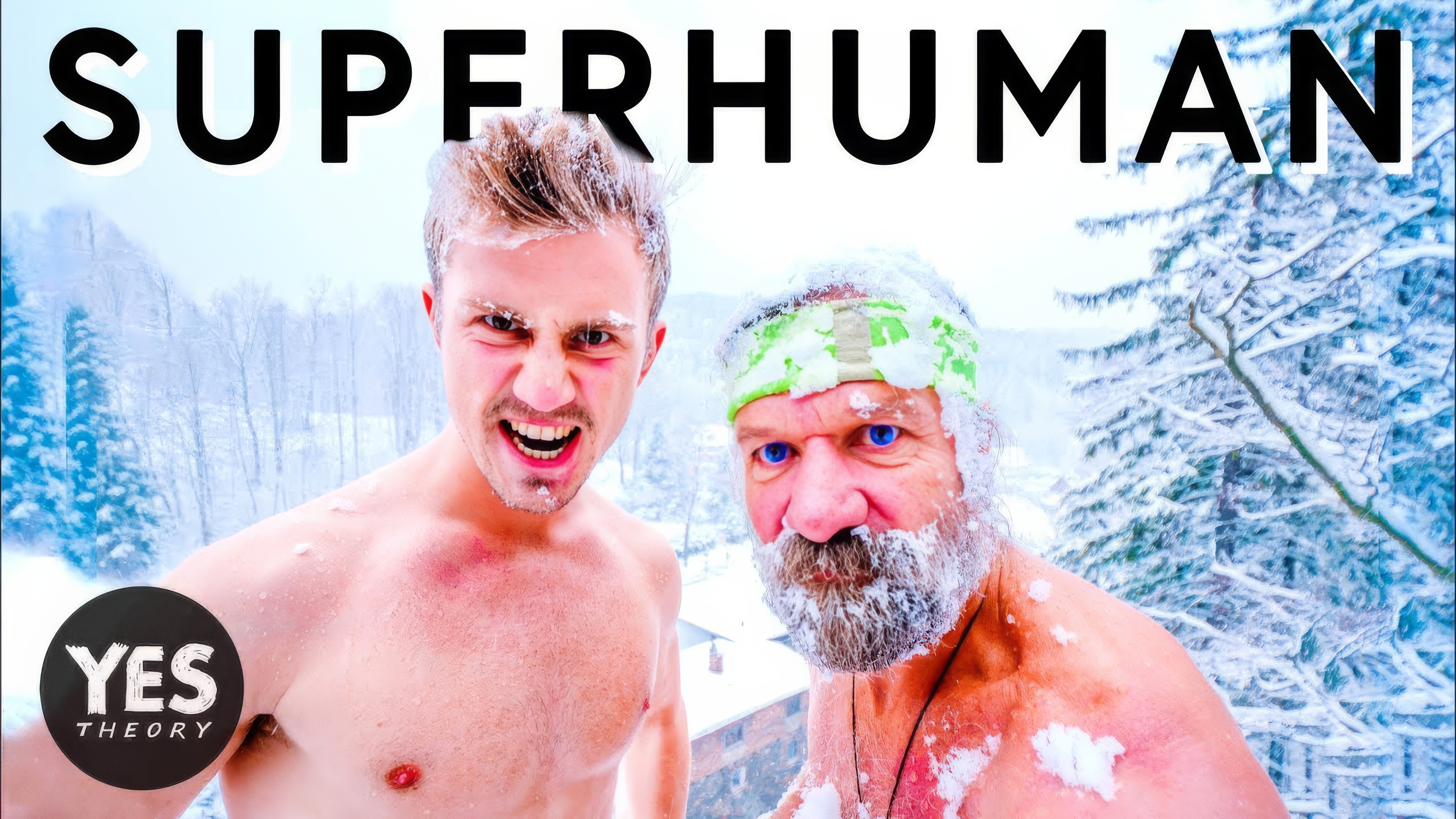
Yes Theory is a global digital brand and creative media project built on the core philosophy of: "Seek Discomfort."
Their content focuses on pushing boundaries — physical, emotional, and cultural — and encouraging viewers to embrace uncertainty, connect with strangers, and grow through discomfort.
DESCRIPTION
Format: documentary-style social experiment series
Platform: independent digital media brand
Seasons: Ongoing (active since 2015)
Episodes: 400+ core episodes
Release Frequency: Irregular
Language: English
Country of Origin: Canada / USA / Global production footprint
Yes Theory is not a travel vlog. It is a psycho-emotional ritual system, designed to interrupt apathy, stimulate neurochemical awakening, and simulate authentic human risk within a controlled narrative scaffold.
They don’t document adventure — they choreograph voluntary discomfort.
At Digital NeuroLab, we view Yes Theory not as creators, but as emotional architects, whose videos consistently activate:
Dopaminergic anticipation loops
Oxytocin release via empathic identification
Cortisol elevation through social risk mirroring
Cognitive resonance through archetypal sequencing
This isn’t just "good storytelling".
This is neurochemical orchestration.
The Hook: Controlled Threat Simulation
Every episode opens with either a tease of risk or an unresolved interpersonal premise.
This is not accidental.
Within the first 3–7 seconds, their format activates the viewer's:
Amygdala – through social or physical discomfort cues
Anterior cingulate cortex (ACC) – via prediction error and micro-anomaly framing
Fusiform face area (FFA) – through close-up, high-emotion human faces
This creates what we call a limbic lock-in: the viewer’s attention is seized before conscious narrative processing begins.
They don’t explain — they provoke.
Structure as Hormonal Engine
Yes Theory episodes are modular, but not episodic. They follow a ritual progression:
Setup — An abstract challenge, often existential or emotional in nature (curiosity spike → dopamine↑)
Discomfort threshold — The team or guest confronts real or symbolic risk (amygdala + insula engagement → cortisol↑)
Surrender or breakthrough — A transformation moment (limbic-to-cortical shift → oxytocin↑, vagal activation)
Resolution with moral clarity — Synthesized insight, not forced (DMN activation → episodic memory encoding)
This mirrors hero’s journey neurodynamics (Campbell + neuropsych integration).
Their success is not due to format novelty — it is due to biological mimicry of meaning construction.
Face, Place, and Pace
They use:
Real strangers with maximal micro-expression visibility – triggering parasocial empathy spikes
Urban and natural liminal spaces – framing change as a physical journey
Cinematic pacing with audio-coded peaks – alternating tension (beta-wave) and reward (theta-wave) rhythms
Their edits avoid overstimulation. Instead, they oscillate between narrative entropy and emotional anchoring, allowing the brain to recover, anticipate, and re-invest.
The viewer isn’t watching a video.
They’re experiencing a simulated rite of passage.
CREATIVE TEAM
• Created by:
• Thomas Brag
• Ammar Kandil
• Matt Dajer
• Derin Emre
• Based on:
• Original concept developed through the "Seek Discomfort" life philosophy and viral social experiments initiated in 2015.
• Executive Producers:
• Thomas Brag
• Ammar Kandil
• Matt Dajer
• Zack Honarvar
• Derin Emreted episodes):
• Thomas Brag
• Matt Dajer
• Ammar Kandil
• Nate Hurtsellers
• Guest directors for collaborations and sponsored projects
• Writers:
• Collaborative scripting across the core team
• Voiceovers primarily written and performed by Thomas Brag
• Emotional story arcs structured post-filming, based on lived events and experience design
• Lead Cast (recurring):
• Thomas Brag as Himself
• Ammar Kandil as Himself
• Matt Dajer as Himself (retired from core content in 2021, occasional appearances)
• Guest appearances by:
• Will Smith
• Colin & Samir
• Jimmy Donaldson (MrBeast)
• Zach King
• Many global creators and strangers from experiments
PRODUCTION
• Production Companies:
• Endeavor Content
• Wowow
• HBO Max
• Filming Locations:
• Primarily shot on location in Tokyo, Japan
• Genre Tags:
• Crime thriller
• Neo-noir
• Journalistic fiction
• Cross-cultural narrative
• Institutional psychology
Yes Theory is not a travel vlog. It is a psycho-emotional ritual system, designed to interrupt apathy, stimulate neurochemical awakening, and simulate authentic human risk within a controlled narrative scaffold.
They don’t document adventure — they choreograph voluntary discomfort.
At Digital NeuroLab, we view Yes Theory not as creators, but as emotional architects, whose videos consistently activate:
Dopaminergic anticipation loops
Oxytocin release via empathic identification
Cortisol elevation through social risk mirroring
Cognitive resonance through archetypal sequencing
This isn’t just "good storytelling".
This is neurochemical orchestration.
The Hook: Controlled Threat Simulation
Every episode opens with either a tease of risk or an unresolved interpersonal premise.
This is not accidental.
Within the first 3–7 seconds, their format activates the viewer's:
Amygdala – through social or physical discomfort cues
Anterior cingulate cortex (ACC) – via prediction error and micro-anomaly framing
Fusiform face area (FFA) – through close-up, high-emotion human faces
This creates what we call a limbic lock-in: the viewer’s attention is seized before conscious narrative processing begins.
They don’t explain — they provoke.
Structure as Hormonal Engine
Yes Theory episodes are modular, but not episodic. They follow a ritual progression:
Setup — An abstract challenge, often existential or emotional in nature (curiosity spike → dopamine↑)
Discomfort threshold — The team or guest confronts real or symbolic risk (amygdala + insula engagement → cortisol↑)
Surrender or breakthrough — A transformation moment (limbic-to-cortical shift → oxytocin↑, vagal activation)
Resolution with moral clarity — Synthesized insight, not forced (DMN activation → episodic memory encoding)
This mirrors hero’s journey neurodynamics (Campbell + neuropsych integration).
Their success is not due to format novelty — it is due to biological mimicry of meaning construction.
Face, Place, and Pace
They use:
Real strangers with maximal micro-expression visibility – triggering parasocial empathy spikes
Urban and natural liminal spaces – framing change as a physical journey
Cinematic pacing with audio-coded peaks – alternating tension (beta-wave) and reward (theta-wave) rhythms
Their edits avoid overstimulation. Instead, they oscillate between narrative entropy and emotional anchoring, allowing the brain to recover, anticipate, and re-invest.
The viewer isn’t watching a video.
They’re experiencing a simulated rite of passage.
Yes Theory is a global digital brand and creative media project built on the core philosophy of: "Seek Discomfort."
Their content focuses on pushing boundaries — physical, emotional, and cultural — and encouraging viewers to embrace uncertainty, connect with strangers, and grow through discomfort.
DESCRIPTION
Format: documentary-style social experiment series
Platform: independent digital media brand
Seasons: Ongoing (active since 2015)
Episodes: 400+ core episodes
Release Frequency: Irregular
Language: English
Country of Origin: Canada / USA / Global production footprint
DIGITAL NEUROLAB

Disclaimer on Brand Mentions and Logos. At Digital NeuroLab,
we research how human attention responds to various forms
of visual and narrative content across the media landscape.
The companies and brands featured on this website represent
benchmarks in content strategy, storytelling, and audience
engagement. We do not claim any formal partnership
or commercial relationship with these organizations unless
explicitly stated. Their logos are included solely to illustrate
the level and type of content our neuro-models are designed
to analyze and optimize for. This representation reflects our
research motivation and industry alignment — not an endorsement,
affiliation, or implication of collaboration. Digital NeuroLab operates
as a scientific and strategic attention lab.
We openly study best-in-class media ecosystems to develop
frameworks that help our clients create content with measurable
cognitive and emotional impact. Referencing leading brands is part
of our transparent benchmarking process — not a marketing tactic.
Our standards are shaped by what performs at the frontier of
perception, and we make no apologies for setting the bar high.
WANT MORE DIGITAL NEUROLAB?
Legal Information
User Agreement
Offer Agreement
Personal Data Processing Policy
Cookie Policy
Consumer Rights Protection Policy
Payment and Security Policy
Company Legal Information
IP Policy
© 2025 Digital NeuroLab Inc. All rights reserved.
Digital NeuroLab Inc. is a Delaware-registered scientific
consultancy specializing in attention and neuro-behavioral modeling.
Registered office: 126192 Coastal Highway, in the city of Lewes, Delaware 19801, USA.
Operating globally — United States · European Union.
Tax ID (EIN): 38-9215473 | Email: contact@digitalneurolab.io
DIGITAL
NEUROLAB
Disclaimer on Brand Mentions and Logos. At Digital NeuroLab, we research how human attention responds to various forms of visual and narrative content across the media landscape. The companies and brands featured on this website represent benchmarks in content strategy, storytelling, and audience engagement. We do not claim any formal partnership or commercial relationship with these organizations unless explicitly stated. Their logos are included solely to illustrate the level and type of content our neuro-models are designed to analyze and optimize for. This representation reflects our research motivation and industry alignment — not an endorsement, affiliation, or implication of collaboration. Digital NeuroLab operates as a scientific and strategic attention lab. We openly study best-in-class media ecosystems to develop frameworks that help our clients create content with measurable cognitive and emotional impact. Referencing leading brands is part of our transparent benchmarking process — not a marketing tactic. Our standards are shaped by what performs at the frontier of perception, and we make no apologies for setting the bar high.
WANT MORE DIGITAL NEUROLAB?
Legal Information
User Agreement
Offer Agreement
Personal Data Processing Policy
Cookie Policy
Consumer Rights Protection Policy
Payment and Security Policy
Company Legal Information
IP Policy
© 2025 Digital NeuroLab Inc. All rights reserved.
Digital NeuroLab Inc. is a Delaware-registered scientific consultancy specializing in attention and neuro-behavioral modeling.
Registered office: 126192 Coastal Highway, in the city of Lewes, Delaware 19801, USA.
Operating globally — United States · European Union.
Tax ID (EIN): 38-9215473 | Email: contact@digitalneurolab.io